
We’ve all been there. You finish a book at 1:00 AM, the house is silent, and you’re just sitting there in the dark staring at the wall because your brain is buzzing and your heart feels two sizes too big. You realize you can’t just put this book on a shelf to gather dust. You have to give it to someone. You have to text your best friend, "Don't ask questions, just read this," or buy three extra copies because you know exactly who needs to hear these specific words.
That is the "Cathie Beck Effect." It’s that magnetic, gritty, and deeply human pull that takes a story beyond the page and turns it into a shared experience. When you look at Denver Post bestseller narrative nonfiction books for sale, you’re seeing titles that have survived the "pass-it-on" test. Cathie doesn’t just write books; she builds survival kits disguised as memoirs. Whether it’s the heart-wrenching, wine-soaked bond in Cheap Cabernet or the raw, "hoodbitch" resilience of her life in Indianapolis, these are the stories that make you feel a little less crazy for having a "burn in your belly" to do something great.
Why "Good Enough" Was Never Going to Cut It
Let’s talk about the grit for a second, because that’s the secret sauce of why people pass her books around. Cathie Beck didn’t just wake up one day with a publishing deal handed to her on a silver platter. In fact, for a long time, the platter was empty and kind of dusty. She spent four years writing and another four years getting rejected by people who probably should have known better. At one point, after 30-odd rejections and an agent who basically told her, "I’m out of steam," Cathie was ready to trade her keyboard for a law school application.
Can you imagine? We almost lost one of the most electric voices in modern memoir to a life of billable hours and depositions.
But Cathie is a former teen mom who raised two kids solo. "Giving up" isn't really in her vocabulary. When the industry told her her work wasn't "likable" enough, she didn't just tweak a sentence; she ripped out half the book and rewrote it. She described it as "peeling my skin back without anesthesia." That is the kind of intensity you find in her prose. It’s why her work makes for the ultimate gifts for narrative nonfiction readers—it’s not just a story, it’s a testament to the fact that you can be "bitter pissed," broken, and exhausted, and still come out the other side with a No. 12 spot on the Amazon charts, neck-and-neck with world leaders. People pass her books on because everyone knows someone who is currently "peeling their skin back" to reach a dream, and Cathie is the proof that the pain is worth the payoff.
The "Virtual Party" That Changed Everything (And Why We’re Still Talking About It)
The reason readers feel such fierce loyalty to Cathie is that she invited us into the hustle. She didn’t wait for permission. After reading about an author who self-published to gain leverage, Cathie went "gargantuan." She didn't just hit 'publish' and hope for the best; she ran a marketing blitz that would make a Fortune 500 company sweat. She found a printer, hired an editor, and even got a winery to make a private label for her book launch. She was a woman on a mission, risking $13,000 and half her annual income on a "hope and a prayer."
On the day of her "virtual party," the internet was buzzing. People were Facebooking and Twittering (back when we called it that) with a frantic energy: "Go buy this book right now!" She was sending screenshots of her rising rank to hundreds of agents who had previously ignored her. And yet, at 7:00 PM that night, she wasn’t popping champagne. She was looking at 86 hate emails from people telling her to "take me off your list." She went to a park and cried.
But then—the email. The "best email of her life" from St. Martin’s Press.
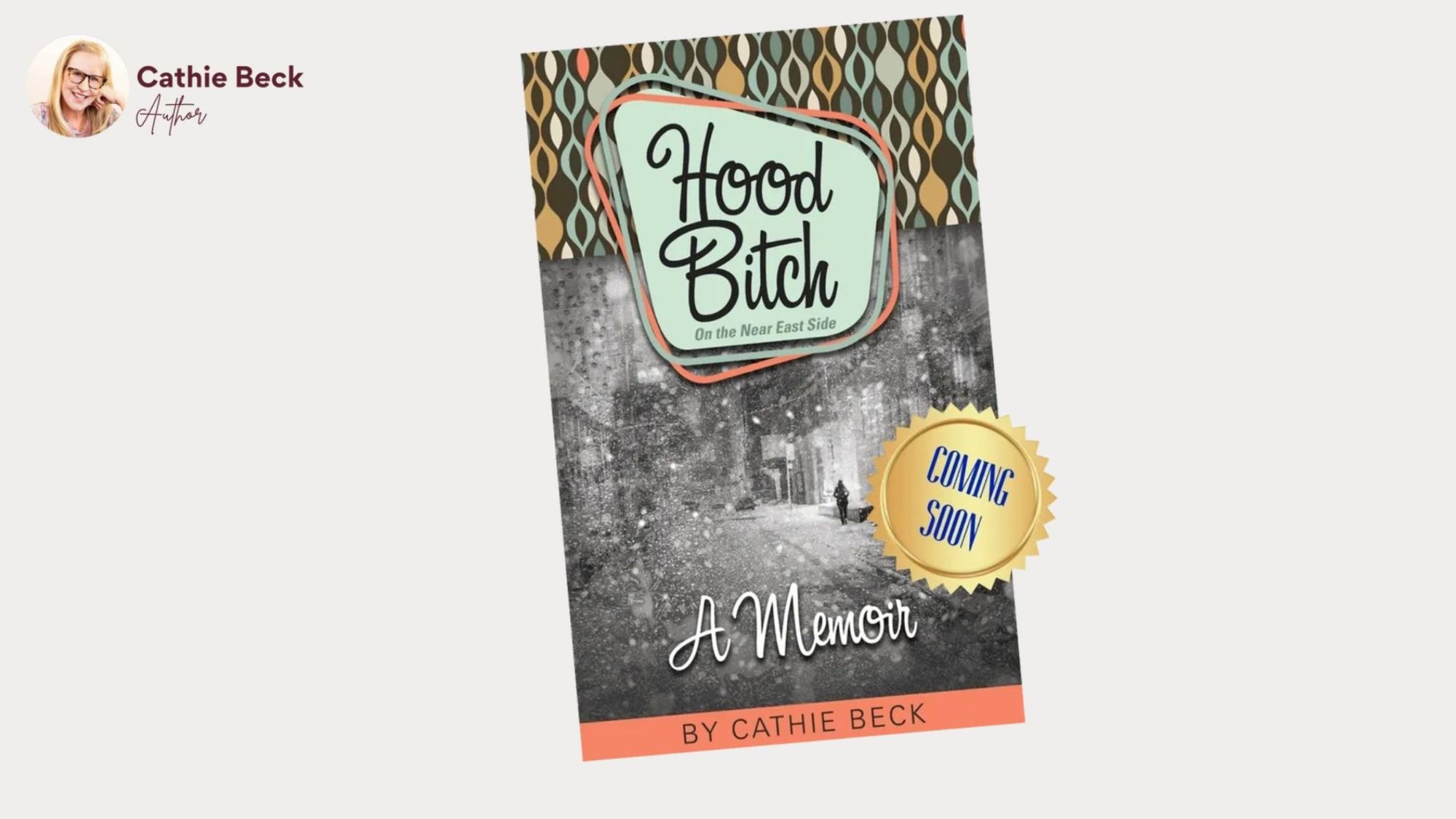
That roller coaster is exactly why her books are Denver Post bestseller narrative nonfiction books for sale that actually stay sold. We connect with the struggle. When she writes about her childhood in Hoodbitch: On the Near Eastside, moving twelve times before age seventeen, we see that same scrappy girl who would later take on New York publishing houses while sitting in her flannel pajamas. You pass this book on because it’s a masterclass in "marketing savvy" and "considerable writing skills" wrapped in a raw, unflinching coming-of-age story.
From Flannel Jammies to the Tattered Cover
There’s a beautiful irony in Cathie’s story. Here is a woman who was told her characters weren't likable, who was told to stop emailing, and who was literally in bed in her pajamas when a high-powered Manhattan agent finally called to say, "Life is about to change."
The reason Cathie’s work resonates so deeply—and why it’s at the top of the list for gifts for narrative nonfiction readers—is that she never lost that "soul thing." She didn't want a book deal just for the money (she still runs her PR agency, after all). She wanted it because she’s had a "burn in her belly" since she was five years old to see her name next to an ISBN number. She famously said she’d "rather be dead and having published a book" than live without having shared her truth.
That kind of passion is contagious. When you read about her life in Indianapolis—the instability, the class struggle, the sheer resourcefulness of a girl trying to find her place—you aren't just reading history. You’re reading a heartbeat. Her prose is described as "electric" for a reason; it shocks you back into caring about your own dreams.
So, when you see someone holding a copy of Cheap Cabernet or Hoodbitch at a bookstore like the Tattered Cover, they aren't just holding a memoir. They’re holding a piece of someone who refused to go to law school so she could tell you that you’re going to be okay. And that, more than anything, is why you don’t just read Cathie Beck. You buy two copies: one for your shelf and one to hand to the next person you see who looks like they’re about to give up. You tell them, "Read this. It’s real. And she made it."