
Bitterness is a flavor most writers know intimately, and I’m not talking about the tannins in a discount bottle of red. For Cathie Beck, that bitterness once tasted like the halls of a law school she never attended. After four years of pouring her soul into a manuscript and another four watching it gather dust under the weight of dozens of rejections, the legal profession started to look like a sanctuary. The publishing world has a specialized talent for bringing even the most resilient creators to their knees, but Beck—a former teenage mother who raised two children solo—wasn't exactly wired for surrender.
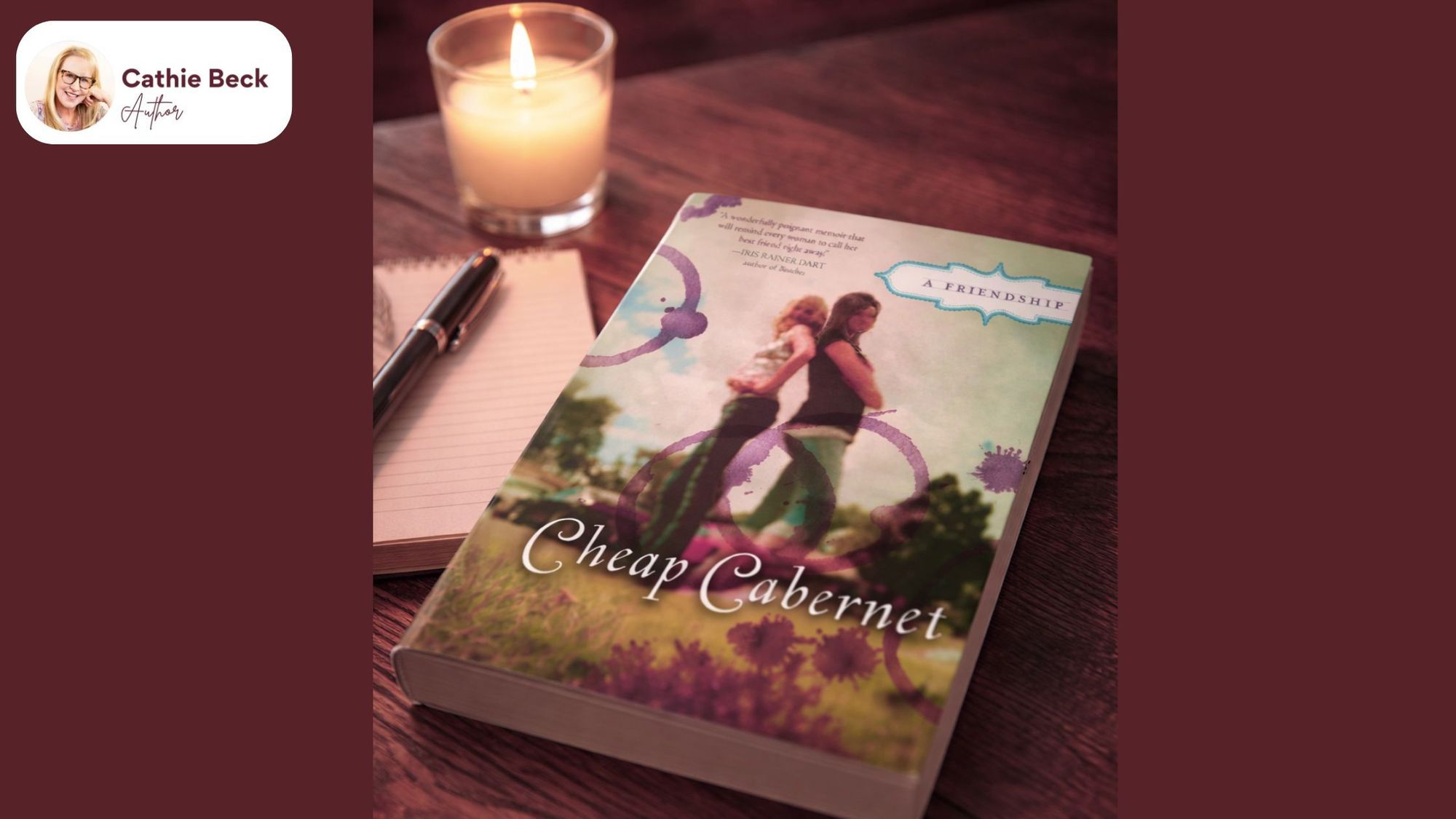
What followed is the kind of literary underdog story that usually only happens in the movies. It’s a narrative of "gargantuan" marketing blitzes, flannel pajamas, and a relentless belief that a story about two women in the Midwest deserved a seat at the table. Today, we look back at the legacy of that persistence and the book that refused to stay on the shelf: the Denver Post bestseller Cheap Cabernet: A Friendship.
The Midwestern Soul and the Weight of Real Connection
At its heart, Beck’s narrative isn’t just about the mechanics of publishing; it’s about the geography of the human spirit. While her upcoming work, Hoodbitch, dives into the fractured, gritty streets of 1960s Indianapolis, it was her debut memoir that first established her as a vital voice for the "unflinching" Midwestern experience. The story took root in 1998 following the death of her friend, Denise, who lived with multiple sclerosis. It wasn’t an immediate book; it was a slow burn, a 90-page "long short story" that eventually morphed into a full-length exploration of grief, laughter, and the messy, beautiful bonds that sustain us when life gets lean.
There is something inherently "real" about the way Beck writes. It isn’t flowery or pretentious. It’s the prose of a journalist who has spent years in the trenches of public relations and freelance reporting—clear, sharp, and deeply empathetic. When readers first discovered the Denver Post best seller Cheap Cabernet, they weren’t just buying a memoir; they were opting into a conversation. They were finding a mirror in the story of a powerful friendship that survived the mundane and the monumental.
The book’s ascent was a masterclass in modern authorial agency. Long before every writer was expected to be a "content creator," Beck was orchestrating a "virtual party" inspired by the success of other indie pioneers. She invested her own savings, cut her income in half to focus on the launch, and even secured a private-label wine to match the title. It was a gamble that felt like a "hope and a prayer," but when the book began climbing the Amazon charts—at one point neck-and-neck with Madeleine Albright—it became clear that the literary world was finally listening.
From Rejection Letters to the Tattered Cover
The transition from a self-published experiment to a major deal with Voice/Hyperion is the stuff of writerly legend. But the "happily ever after" wasn’t a straight line. It involved 86 pieces of hate mail from agents who didn't appreciate her bold marketing tactics and a tearful morning in a Denver park. The turning point came not from a massive marketing firm but from a single email from a St. Martin’s Press editor and a phone call with a powerhouse agent in a noisy Manhattan Starbucks.
Seeing the Denver Post bestseller Cheap Cabernet reach such heights is a testament to the "burn in the belly" that Beck describes—a lifelong desire to see an ISBN number attached to her name. That visceral need to tell the truth is what makes her work resonate with book clubs and serious readers alike. She didn't just write a book; she fought for its right to exist in the hands of readers.
The industry accolades followed naturally: a 1st Place in Non-Fiction from the Denver Women’s Press Club, a Target Emerging Author selection, and multiple finalist nods. These aren't just stickers on a cover; they are validation for every writer who has ever considered "giving up" for a more stable career path. Beck proved that a memoir rooted in the Midwest, filled with uproarious wit and raw honesty, could break through the noise if the author was willing to be as loud as the story required.
A Legacy of Resilience
Reflecting on the journey of the Denver Post bestseller Cheap Cabernet: A Friendship, it’s easy to focus on the sales and the rankings. But the true value of the work lies in its authenticity. It captures a specific kind of American resilience—the kind that isn't afraid of "peeling skin back without anesthesia" to get to the emotional truth of a scene. Whether she is discussing the grief of losing a friend or the instability of her youth in Indianapolis, Beck writes with a "piercing honesty" that places her alongside contemporary greats like Leslie Jamison or Maggie Nelson.
As she prepares to release Hoodbitch, a raw coming-of-age story that promises the same "electric prose," it’s worth revisiting the wine-stained pages that started it all. Cheap Cabernet wasn’t just a title; it was a vibe, a lifestyle, and a reminder that the best stories don't always come from the top shelf. They come from the people who have lived through the lean years and survived to tell the tale over a glass of something affordable and a lot of heart-twisting laughter.
In a world of polished, ghostwritten celebrity memoirs, the enduring popularity of Beck’s work reminds us why we read in the first place: to feel less alone, to honor our friendships, and to witness the triumph of a voice that refused to be silenced by a stack of rejections. It’s a friendship worth reading, indeed.